
Benin Republic: 6 things you need to do if you’re travelling to the land of the Amazons
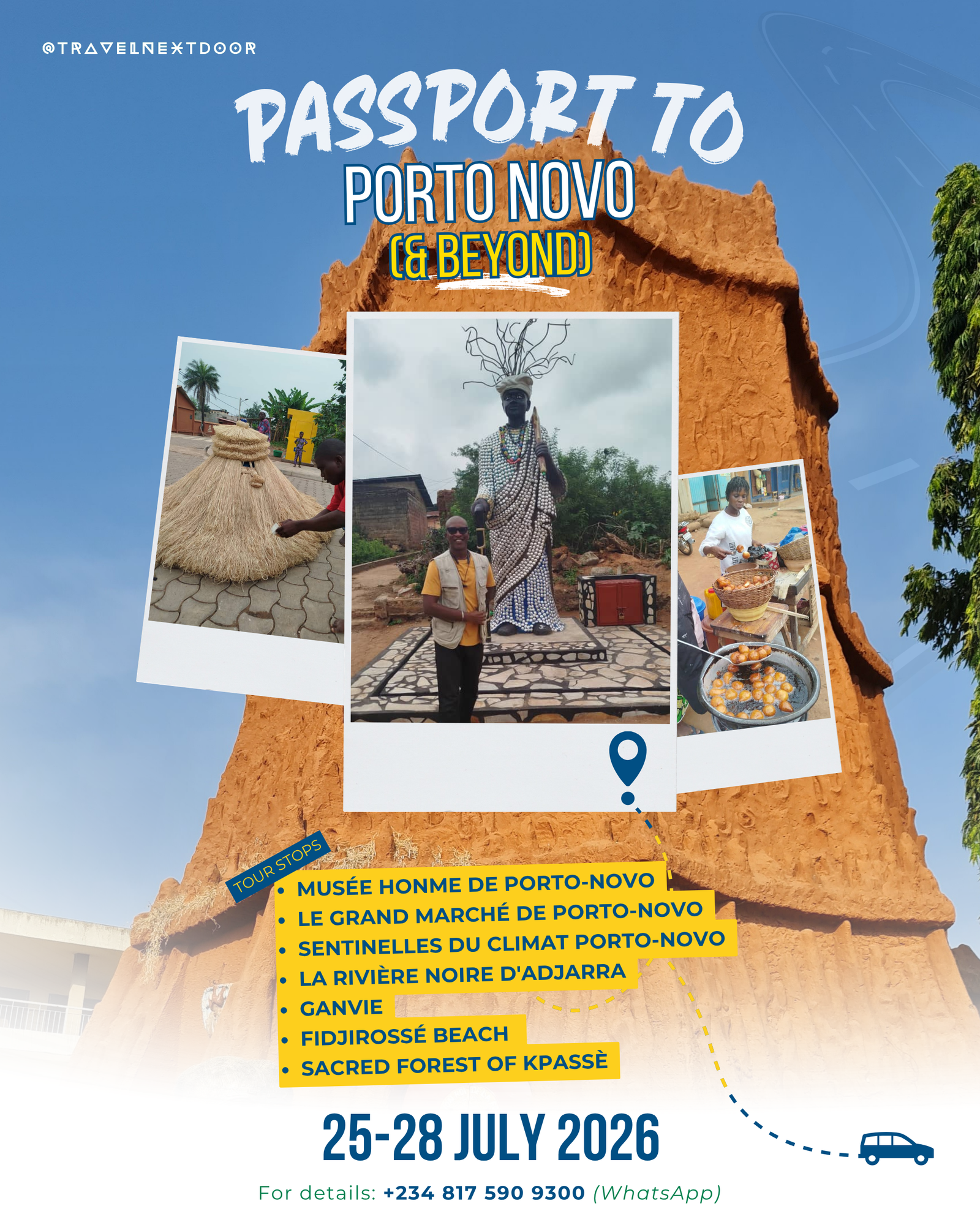
Benin Republic is a small country in West Africa which, despite its size, attracts many people worldwide due to its geographical location. Business people are interested in it for trade and commerce. It is the same for travellers who use it to transit to other countries. On the other hand, holidaymakers are interested in enjoying the thrills and frills of its numerous sandy beaches, religious and cultural festivals, and other tourist attractions.
Bordered on the East by Nigeria, the west by Togo, and North by Burkina Faso and Niger, former Dahomey (recall the Dahomey Kingdom in your History class?) is one fun place to go to because of its scenic beauty, its multi-cultural and welcoming people, business opportunities and numerous tourist sites. Year-round, especially during festivals, its capital (Port-Novo) and the economic capital (Cotonou) are to visitors what honey is to flies.

PLACE DES MARTYRS (One of the memorial statues in Cotonou, Benin’s commercial capital)
Here are six things you must do if you want to go to Benin for adventure, business or vacation:
- Get your International Passport or ECOWAS Travel Certificate
Just as you need a green passport for international travel to the United States and the United Kingdom, you need an International Passport to travel to the Benin Republic, despite the country being one of the countries where Nigerians and other ECOWAS citizens can go without a visa.
However, if you do not have an international passport or yours has expired, the ECOWAS Travel Certificate is an option. You can get the ECOWAS Travel Certificate, a travel document acceptable across ECOWAS member states, from the Nigeria Immigration Service at any Passport office.

A copy of the ECOWAS Travel Certificate (Blue)
The good thing about the ECOWAS Travel Certificate is that it is less of a hassle to process than the International Passport. You can get the document, which has two-year validity, in less than 24 hours from any passport office across Nigeria. Currently, the official price as published on the Nigeria Immigration portal for obtaining an ECOWAS Travel Certificate is N25,000, though it may cost you between N25,000 and N50,000 in reality.
Whether travelling with either your International Passport or the ECOWAS travel document, make sure the document is stamped by the Immigration officials both at the port of entry and departure.
2. Get Your Yellow Card
Travels within Africa require vaccination against yellow fever a lot of the time. The Yellow Card is a validation that you have taken this vaccine. You can obtain this at the Port Health office nearest to you. In Lagos, Port Health is located at the Ikeja airport, close to the Toll Gate — just after NAHCO.

A copy of the yellow fever vaccination card (Yellow)
3. Change some money into CFA
If you travel to Benin Republic by road, you must have the country’s currency for essentials and other transactions — like paying for car, bike rides, or meals. Although you find the Naira in circulation in the Benin Republic due to the heavy presence of Nigerian businessmen, tourists and money changers, some of whom run Naira–denominated POS businesses, it is always best to keep some CFA handy to sort basic needs.
You must know the Naira-to-CFA exchange rate beforehand to bargain for a fair rate with money changers at the borders and major markets.

A bundle of 10,000 CFA notes

4. Get hotel accommodation
The regular thing most travellers do is to make hotel reservations ahead of time when travelling to a new place. However, the travel tip those in the know would give you when travelling to the Benin Republic for the first time is, “Get there first,” and you can sort out your accommodation issues.
Why? The Benin Republic has a viable service industry with many hotels and guesthouses for every budget. On arrival, you can check out hotels to see if they match your taste before you check in to avoid the ‘what-I- ordered-versus-what-I-got’ kind of experience.
Secondly, hotel accommodations in the Benin Republic are priced based on energy consumption. So, a modest hotel accommodation for a room with a fan goes for 10,000 CFA- 10,500 CFA), a room with an air-conditioner (15,000 CFA- 20,000 CFA), or a room with AC and breakfast between (23,000 -25,000). There are also luxury hotels which you can readily find online.

The lobby of a hotel reception in Porto-Vovo
5. Find an interpreter
If you are from an English-speaking country, except you understand French (which is the official Language of Benin Republic) or Fon, the major ethnic group in that country or Yoruba (12 per cent of Benin population are Yorubas, according to the country’s 2013 Census), you will need an interpreter to help you navigate the place effortlessly.
There are young, bilingual men and women who work as tour guides and can make it easy for you if you engage them to show you the town for a fee.

An English-speaking guide at the Python Temple, Ouidah
6. Get your helmet
Except you are travelling in your car or have decided to stick to car hire or book a ride online, the most typical and most accessible means of getting around in Benin Republic, whether going to the market or checking out tourist sites, are commercial bike riders.
Do not fear carefree or wild riders; you hardly find such. Safety rules, including wearing helmets, are strictly followed, or you or the rider may face sanctions. To avoid using helmets indiscriminately as a health precaution, some people in Benin prefer to carry them in hand even when they do not own bikes.

Motorcycle taxis are the primary means of transportation in major cities of Benin Republic