
The Badagry Route
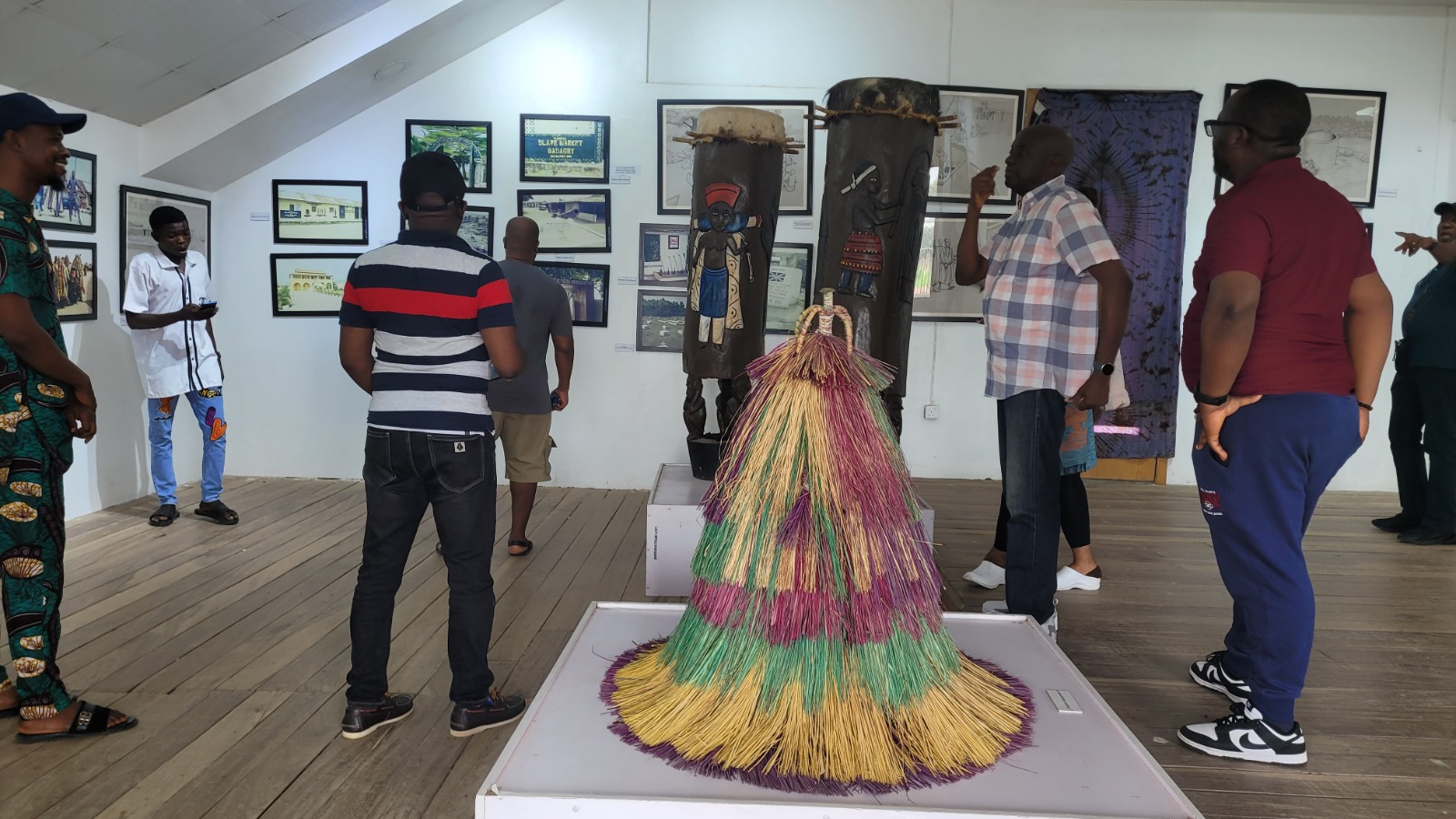
Anyone can understand why callers to the slave ports at Elmina (Ghana), Goree (Senegal) and Ouidah (Benin) weep and wail after they have walked round the remains of the transatlantic slave trade in those regions. To even see images on the screen is enough to affect the senses sorely. The Black Heritage Museum—just opened to tourists in palm-and-coconut-rich Badagry, western Lagos—is another of the kind. Maybe the place won’t stir you to tears, but after going in and out, then up and down its nine galleries, it is certain to make any visitor sober.
The National Commission for Museums and Monuments (NCMM) in Nigeria, which helped with the research and installation, displays sketches, sculptures, photos, documents and dated shackles to tell the touching tale of over 300 years of ‘trading’ of which the African people were the ‘goods’.
We are now inside the building and this ad published in 1784 in the U.S. stares me in the face: “NEGROS FOR SALE: a cargo of very fine stout men and women, in good order and fit for immediate service, just imported from the windward coast of Africa…” Another in New Orleans, this time in 1835 described its ‘ware’ in detail: Chole…aged 36 years. She is without exception, one of the most competent servants in the country, a first-rate washer and ironer, does up lace, a good cook, and for a bachelor who wishes a housekeeper she would be invaluable. She is also a good ladies maid, having travelled to the north in that capacity.”
One learns a typical slave’s safari goes something like this: A freeborn is kidnapped, captured at war or despatched to a creditor to offset a debt. He is kept in custody and made to do simple menial duties at first. A time comes when a white businessman, sailing across from the west, seeks out the community’s head and demands for people to serve him and his wealthy colleagues back on their own soil. He proffers gins, guns and some other processed goods in exchange.
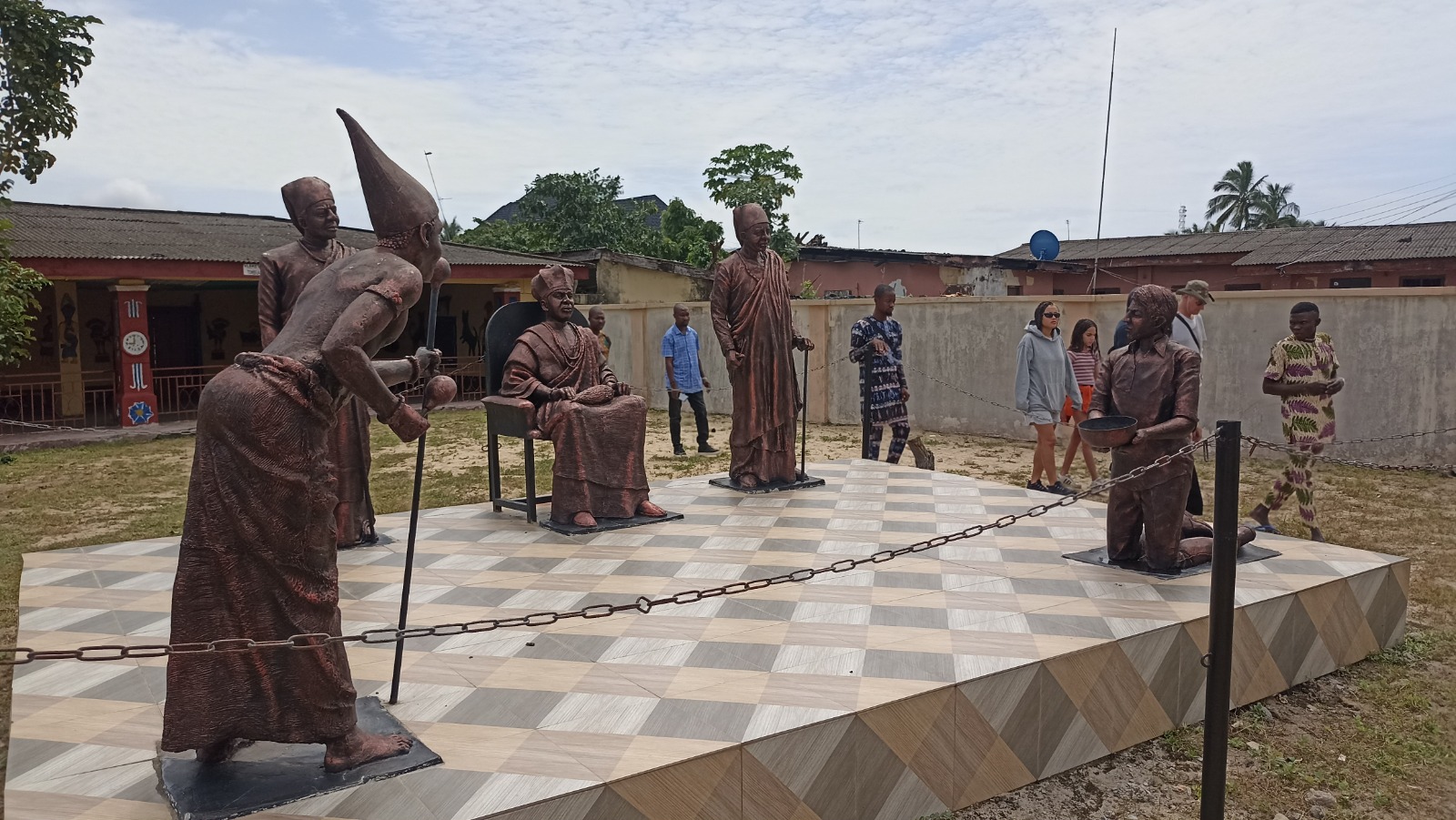
The deal sounds sensible enough and both parties come to an agreement. So starts the tortuous trip of an unfortunate African, the fall guy of unfeeling men (much later, markets were established to service the rising need for cheap human labour). He never travels alone; there are thousands of them at any occasion, group-chained, flogged to submission and silence, and ‘arranged’ in ships in patterns that guarantee little breathing space and more anguish. Not all of them survived. The dead were tossed overboard.
Sons and daughters, too, no matter how under-aged, were hauled across the Atlantic from the African coast to the New World. The survivors were later put on kegs and boxes and auctioned like articles at Sotheby’s. Once sold, they toiled on the cotton, sugarcane or rice fields of their white masters—and it was almost round the clock—with the cruellest of punishments administered to those who attempted to bail (one exhibit shows a dog, purposely trained, biting at the throat of one). Others worked as domestic hands. There is more inside what used to be the District Officer’s administrative block in the colonial years and is a three-minute stroll from the white structure earmarked as the first storey building in Nigeria.
The opening of the museum in August 2002 put the inhabitants in the mood for the second Black Heritage Festival, said to be styled after Ghana’s decade-old Pan-African Historical Theatre Festival (PANAFEST) and organised to conform to UNESCO’s ‘Slave Routes Project’. Lagos State Waterfront and Tourism Development Corporation, the planners, intends for the festival with time to pep up the tourism receipts of Nigeria’s most commercialised city; for the time being, though, it is finding a sure footing and winning more participants from the Diaspora each year that are the goals.
Day four of the festival was all traditional stuff: The dozen delegates, all of them living in the U.S., had to go through a ceremony of ‘ethnic adoption and traditional robbing’ to choose the local names they wished to bear henceforth. Two home priests in the full glare of the town’s royal head, the Akran of Badagry, conducted that. The idea is not for the new names to replace the initial, but for the recipient to either add them on or to “keep it close to my heart”. The naming was performed with honey, sugarcane, salt, kola, and the other regulars in day-to-day Yoruba naming rites.
The Yoruba in Nigeria look to the Ifa for the same reasons Christians and Moslems search through the Holy Books. No move is made without consulting it. It gave its consent to the names the home comers preferred. At different times during the festival, the kola nut and bitter kola were tossed in another form of customary inquest. Each result turned out a pleasant omen: The land of Badagry agreed with the coming of Mayor Hawkins and co.
Badagry today is a smiling and struggling population of close to two hundred thousand. The Atlantic Ocean, its bane for centuries, flows subtly and quietly; the breeze still blows over it-and onto the mainland, and one can still sight natives paddling away in their canoes in the distance. The one thing it needs now is a rise in stature. The New Nigerians may well make that happen, because already, the group has promised to revisit its scholarship promise to the community’s bright minds; the other project will be to erect another impressive monument to the slave trade a la the ‘Point of no Return’.
The Akran of Badagry, on behalf of the people, has promised pieces of land to the new natives, because they need, he says, to have their own homes, one they can come to whenever they please.
Editor’s Note: This piece was first published (in 2010) on Travel Intelligence, a UK-based travel platform. Some specifics may have changed since then [The Akran of Badagry, for example, passed away in January 2026) and a new king is yet to be chosen], but the general outlook of Badagry painted in the story is very much the same.